
Vor Memmo waren meine Notizen überall in PDFs verstreut. Jetzt sammelt ein Arbeitsbereich alles an einem Ort – ich sehe genau, was noch zu lernen ist.
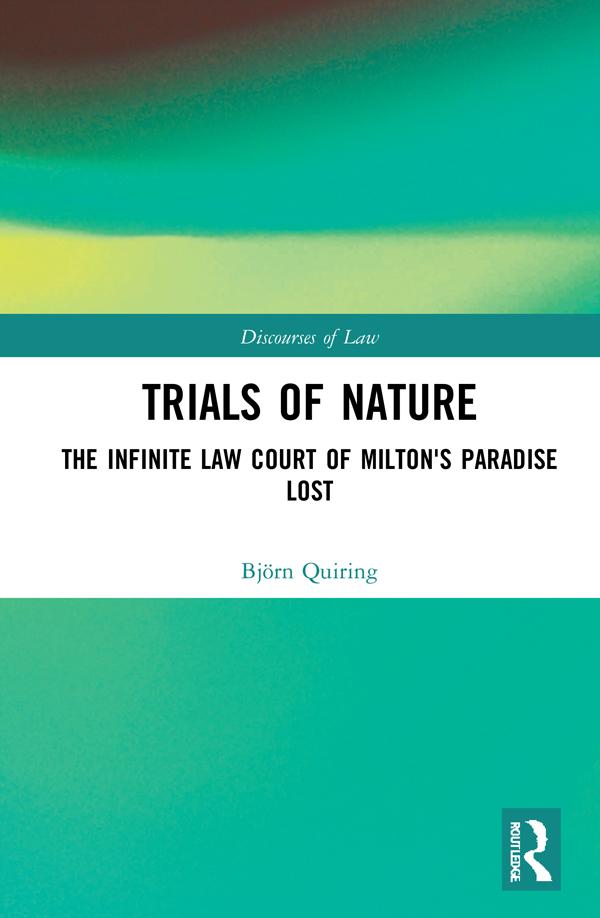
Focusing on John Milton’s Paradise Lost , this book investigates the metaphorical identification of nature with a court of law – an old and persistent trope, haunted by ancient aporias, at the intersection of jurisprudence, philosophy and literature. In an enormous variety of texts, from the Greek beginnings of Western literature onward, nature has been described as a courtroom in which an all- encompassing trial takes place and a universal verdict is executed. The first, introductory part of this study sketches an overview of the metaphor’s development in European history, from antiquity to the seventeenth century. In its second, more extensive part, the book concentrates on Milton’s epic Paradise Lost in which the problem of the natural law court finds one of its most fascinating and detailed articulations. Using conceptual tools provided by Hannah Arendt, Walter Benjamin, Hans Blumenberg, Gilles Deleuze, William Empson and Alfred North Whitehead, the study demonstrates that the conflicts in Milton’s epic revolve around the tension between a universal legal procedure inherent in nature and the positive legal decrees of the deity. The divine rule is found to consolidate itself by Nature’s supplementary shadow government; their inconsistencies are not flaws, but rather fundamental rhetorical assets, supporting a law that is inherently "double- formed". In Milton’s world, human beings are thus confronted with a twofold law that entraps them in its endlessly proliferating double binds, whether they obey or not. The analysis of this strange juridical structure can open up new perspectives on Milton’s epic, as well as on the way legal discourse tends to entangle norms with facts and thus to embed itself in human life. This original and intriguing book will appeal not only to those engaged in the study of Milton, but also to anyone interested in the relationship between law, history, literature and philosophy.
Vor Memmo waren meine Notizen überall in PDFs verstreut. Jetzt sammelt ein Arbeitsbereich alles an einem Ort – ich sehe genau, was noch zu lernen ist.
Memmos Zusammenfassungen sind Gold wert vor Prüfungen. Ich muss nicht zwei Wochen vorher 800 Seiten neu lesen – nur die wichtigsten Teile.
Der KI-Chat hat mich schon mehr als einmal am Abend vor einer Prüfung gerettet. Ich frage einfach so lange, bis ich es kapiere – ohne auf eine Antwort in einer Lerngruppe warten zu müssen.
Die Quizzes treffen genau das, was ich wissen muss. Memmo merkt sich, wo ich Schwierigkeiten habe – so übe ich nur das, was sich lohnt.
Lernkarten mit Spaced Repetition sind Magie. Memmo weiß, wann ich etwas vergessen könnte und zeigt es mir wieder.
Die KI-Podcasts sind mein Favorit. Ich höre sie auf dem Weg zur Uni und bekomme eine Wiederholung, ohne am Computer sitzen zu müssen.

Handbok i kvalitativa metoder
281 kr

Hållbar utveckling: en introduktion för ingenjörer och andra problemlösare
334 kr

Brymans Samhällsvetenskapliga metoder
390 kr

Projektledning
491 kr

Den orättvisa hälsan: om socioekonomiska skillnader i hälsa och livslängd
326 kr

Organizational Leadership
429 kr

Vetenskapsteori för nybörjare
196 kr

På väg mot läraryrket
172 kr

Det sociala livet i skolan: Socialpsykologiska perspektiv
253 kr

Betygsättningens didaktik
151 kr

Personality
402 kr

Studying Leadership
404 kr

Managing Innovation
477 kr

Introduktion till samhällsvetenskaplig metod
347 kr

The Psychology of Sex and Gender
698 kr

Introduction to Leadership
605 kr

Evidens och kunskap för socialt arbete
207 kr